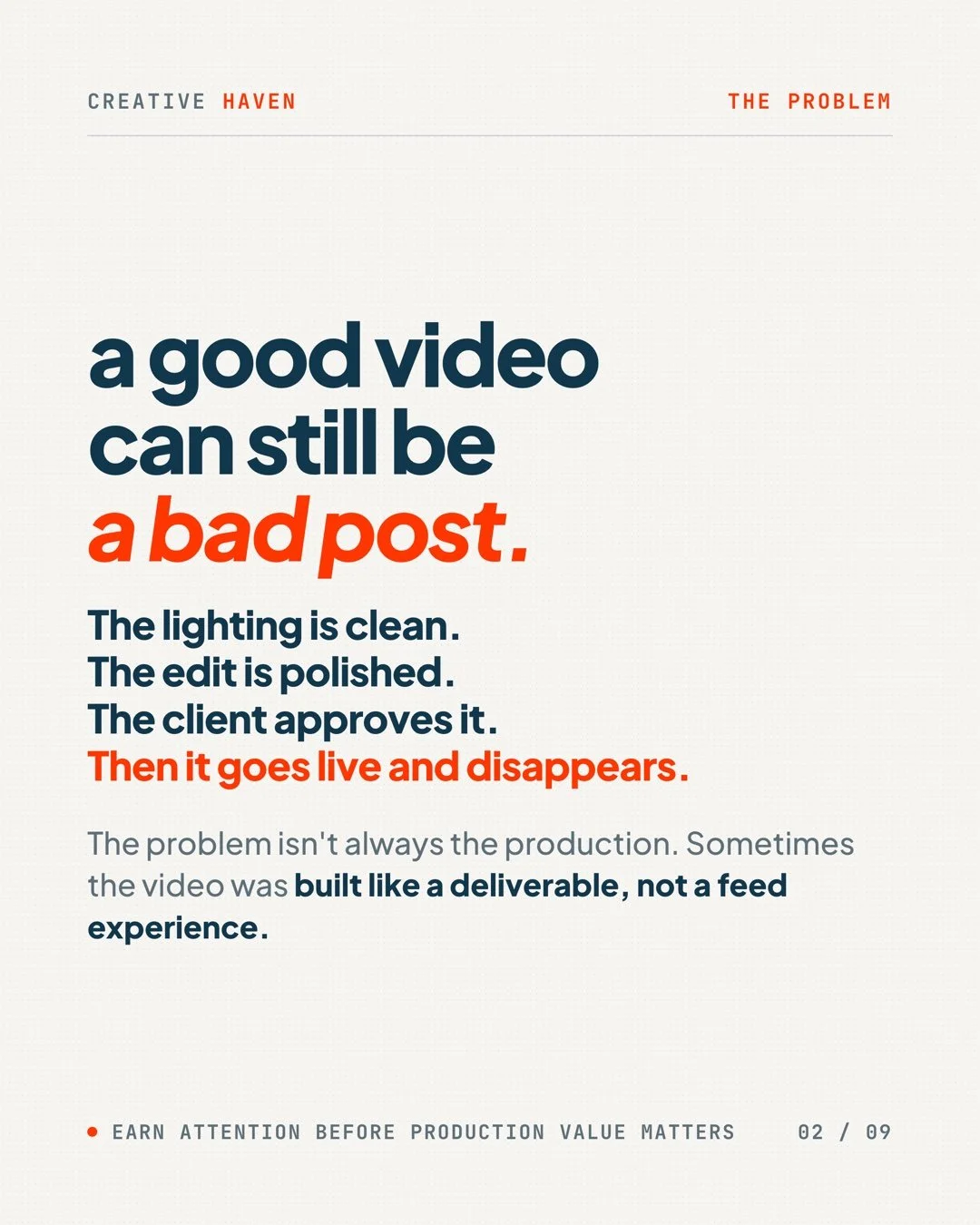
You've seen it happen. The lighting is clean, the edit is polished and the client signs off on the first round. Everyone is happy. Then the video goes live and disappears. It gets a few hundred views and a couple of likes from the team. Then the client asks the question nobody wants to hear: Why didn't it work?
Most of the time, the problem isn't the production. The video was built like a deliverable, not for the feed. A deliverable has to look good on a review call. A social video has to earn attention from someone who never asked to see it, while their thumb is already moving.
Production value makes a video credible. Structure makes it watchable. After 20 years in video production, these are the five rules we check before any social video goes out.
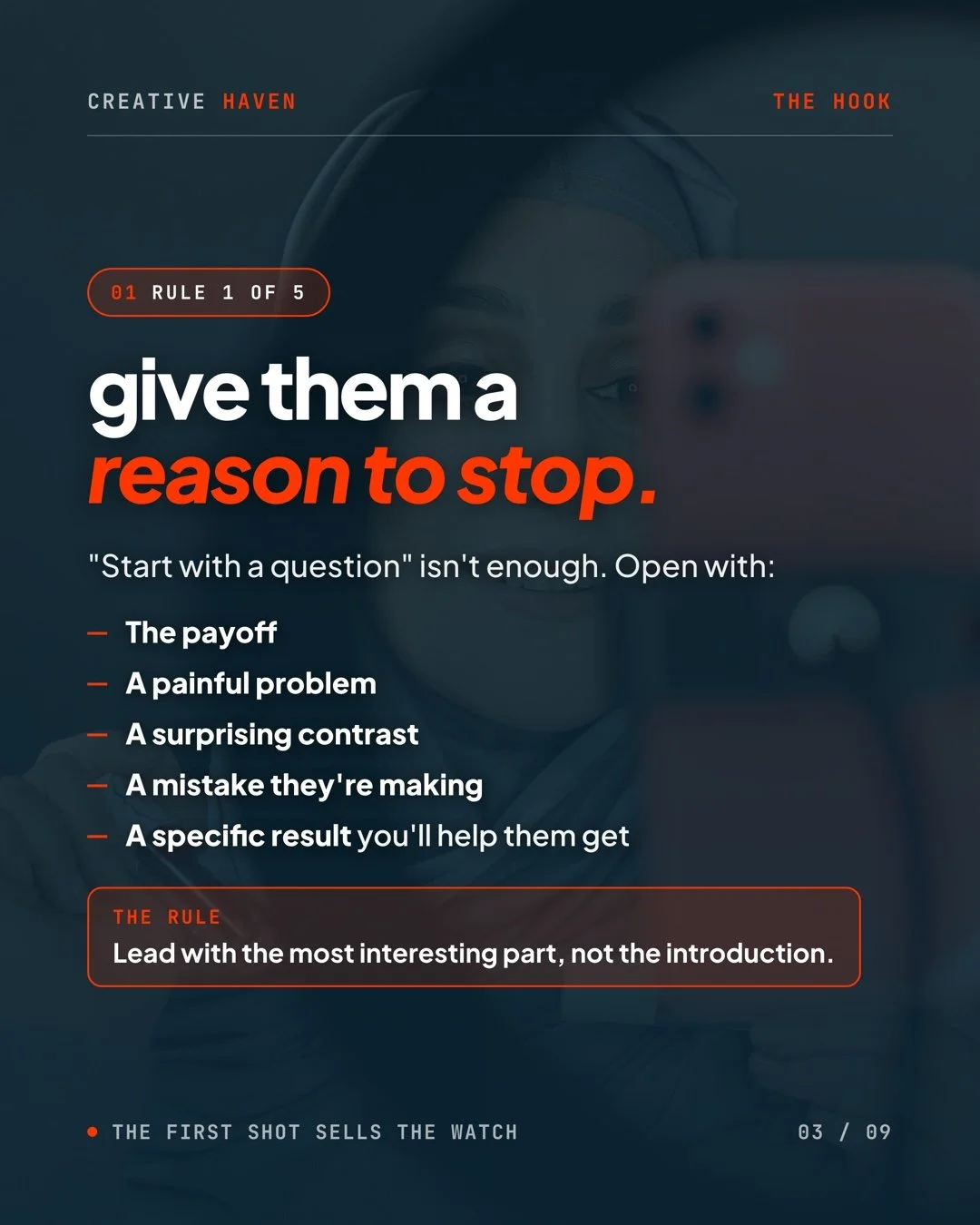
1. The hook: Give them a reason to stop
The first few seconds decide whether anyone sees the rest. "Start with a question" is common advice, but a vague question is easy to scroll past. A stronger opening makes the value of watching obvious right away.
Open with:
The payoff: Show the finished result first, then explain how you got there.
A painful problem: Name the frustration your audience already feels.
A surprising contrast: Show the before and after, or the expected and actual result.
A mistake they're making: People pay attention to something that might be costing them.
A specific result: Promise a clear outcome you can help them get.
The most common mistake we see is a slow opening: a logo animation, a wide establishing shot or a "Hi, I'm..." introduction. Save those for later, or cut them.
The rule: Lead with the most interesting part, not the introduction.
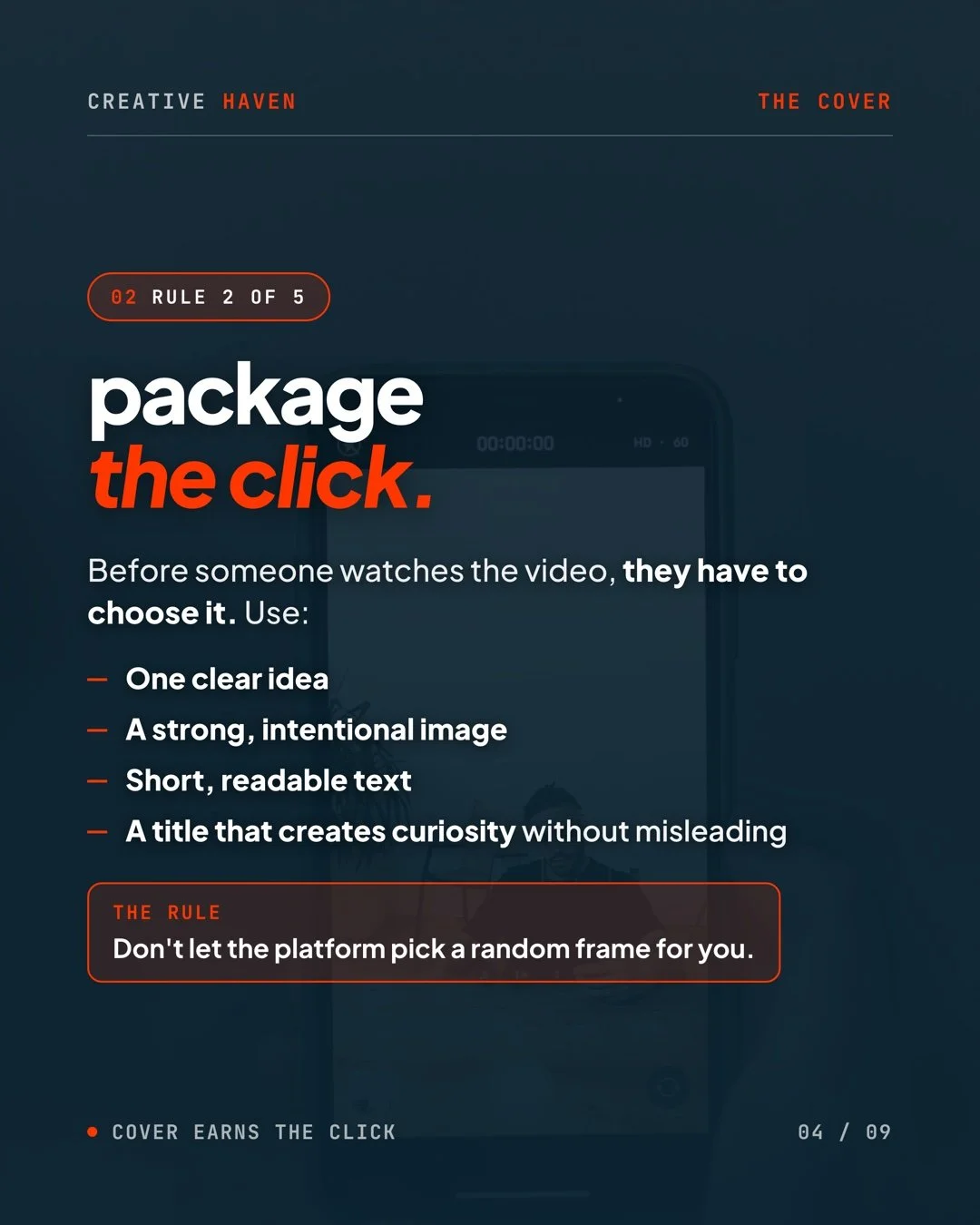
2. The cover: Package the click
On many platforms, viewers choose a video before they watch it. On YouTube, a profile grid, a Reels tab or a LinkedIn feed, the cover frame is the ad for the video. If you let the platform pick a random frame, you might get a blink, a blurry transition or a half-finished gesture.
A strong cover has:
One clear idea, not three.
A strong, intentional image, often a face or the product at its best.
Short, readable text that works at thumbnail size on a phone.
A title that creates curiosity without misleading the viewer.
Plan the cover during the shoot, not after the edit. A dedicated cover photo or planned frame takes minutes on set and can save the post.
The rule: The cover earns the click. The video earns the watch.
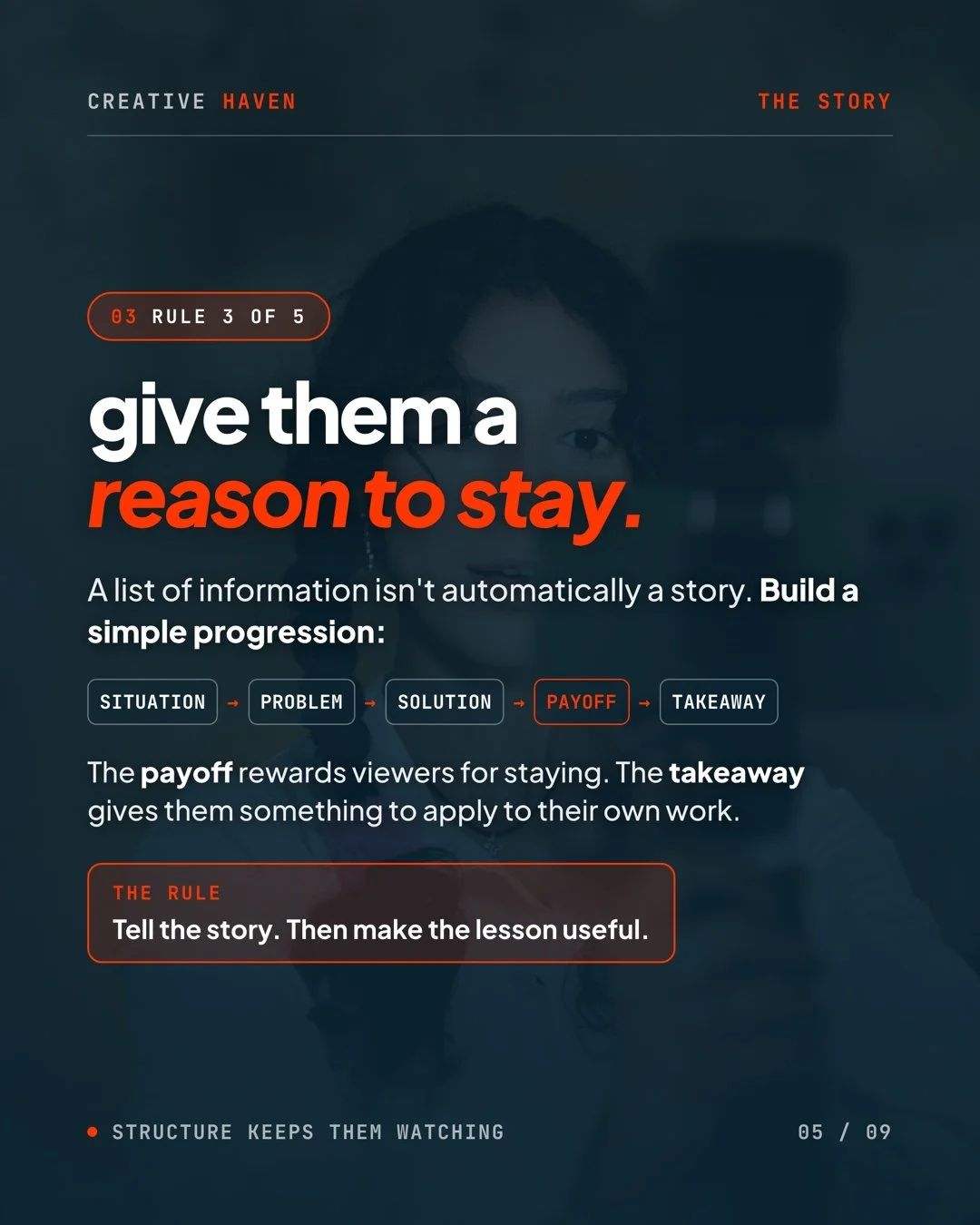
3. The story: Give them a reason to stay
A list of facts isn't a story, even if each fact is useful. Viewers stay when they feel something moving toward a payoff. The simplest structure we use for social video is:
Situation > Problem > Solution > Payoff > Takeaway
The situation sets the scene. The problem creates tension. The solution shows what changed. The payoff rewards the viewer for staying. The takeaway gives them something they can apply to their own work.
This works in 30 seconds or 10 minutes. It works for a product launch, a founder story, a customer testimonial or a how-to. It also gives everyone on the project, from the client to the editor, a shared map of what the video needs to do.
The rule: Tell the story, then make the lesson useful.
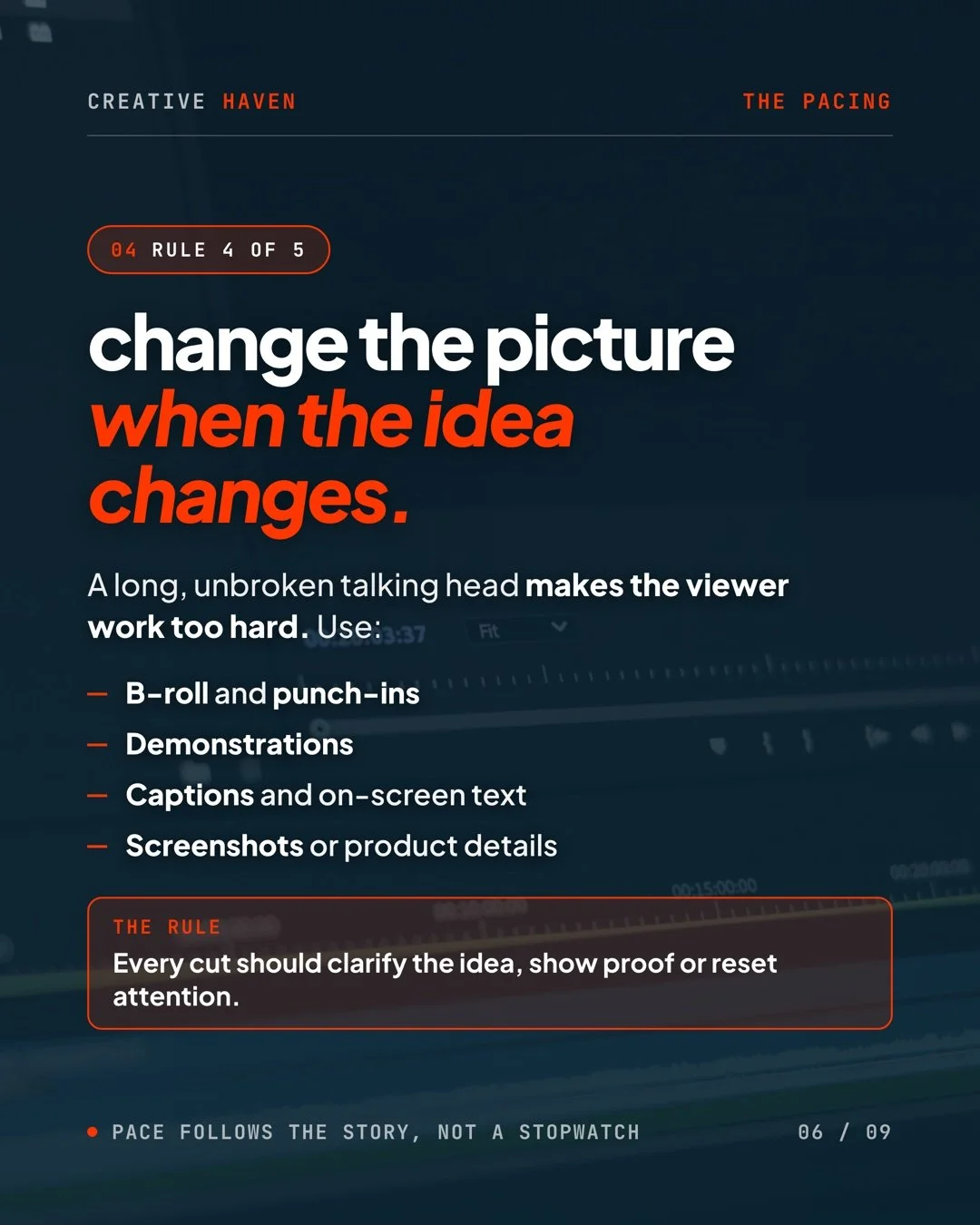
4. The pacing: Change the picture when the idea changes
A long, unbroken talking head makes the viewer do all the work. Even a great speaker loses people when the frame never changes. That doesn't mean cutting every second for the sake of it. It means the picture should change when the idea changes.
Use:
B-roll that shows what the speaker is describing.
Punch-ins to add emphasis and reset attention.
Demonstrations of the product, process or result.
Captions and on-screen text for viewers watching without sound.
Screenshots or product details that prove the point.
This starts on set. If the crew doesn't capture cutaways, close-ups and product details, the editor has nothing to cut to. Planning coverage for the edit is one of the biggest differences between footage that looks good and footage that makes a good social video.
The rule: Every visual change should clarify the idea, show proof or reset attention. Pace follows the story, not a stopwatch.
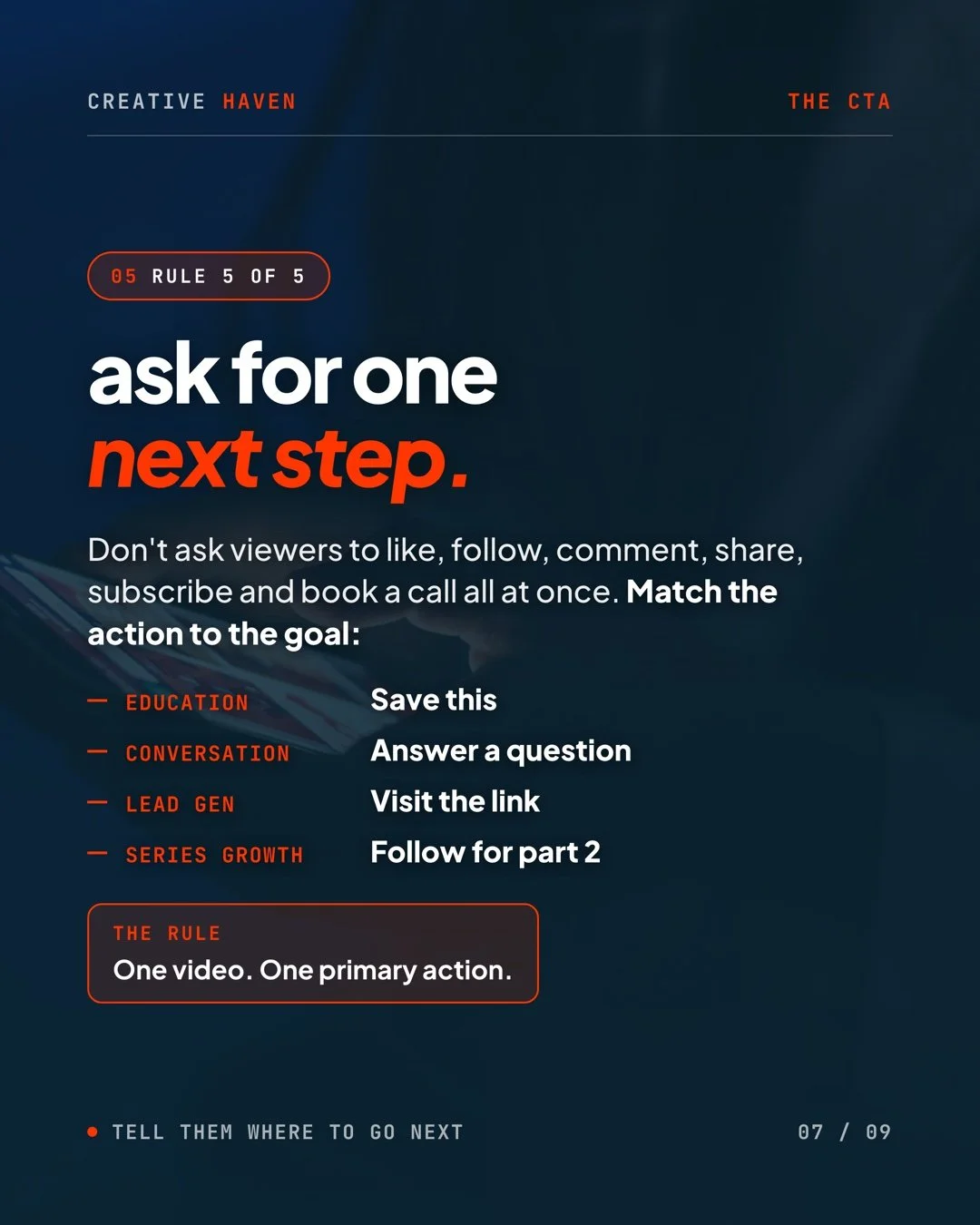
5. The CTA: Ask for one next step
Many videos end by asking viewers to like, follow, comment, share, subscribe and book a call all at once. When you ask for everything, people usually do nothing. Pick the one action that matches the goal of the video:
Education: Save this.
Conversation: Answer a question in the comments.
Lead generation: Visit the link.
Series growth: Follow for the next part.
The rule: One video, one primary action.
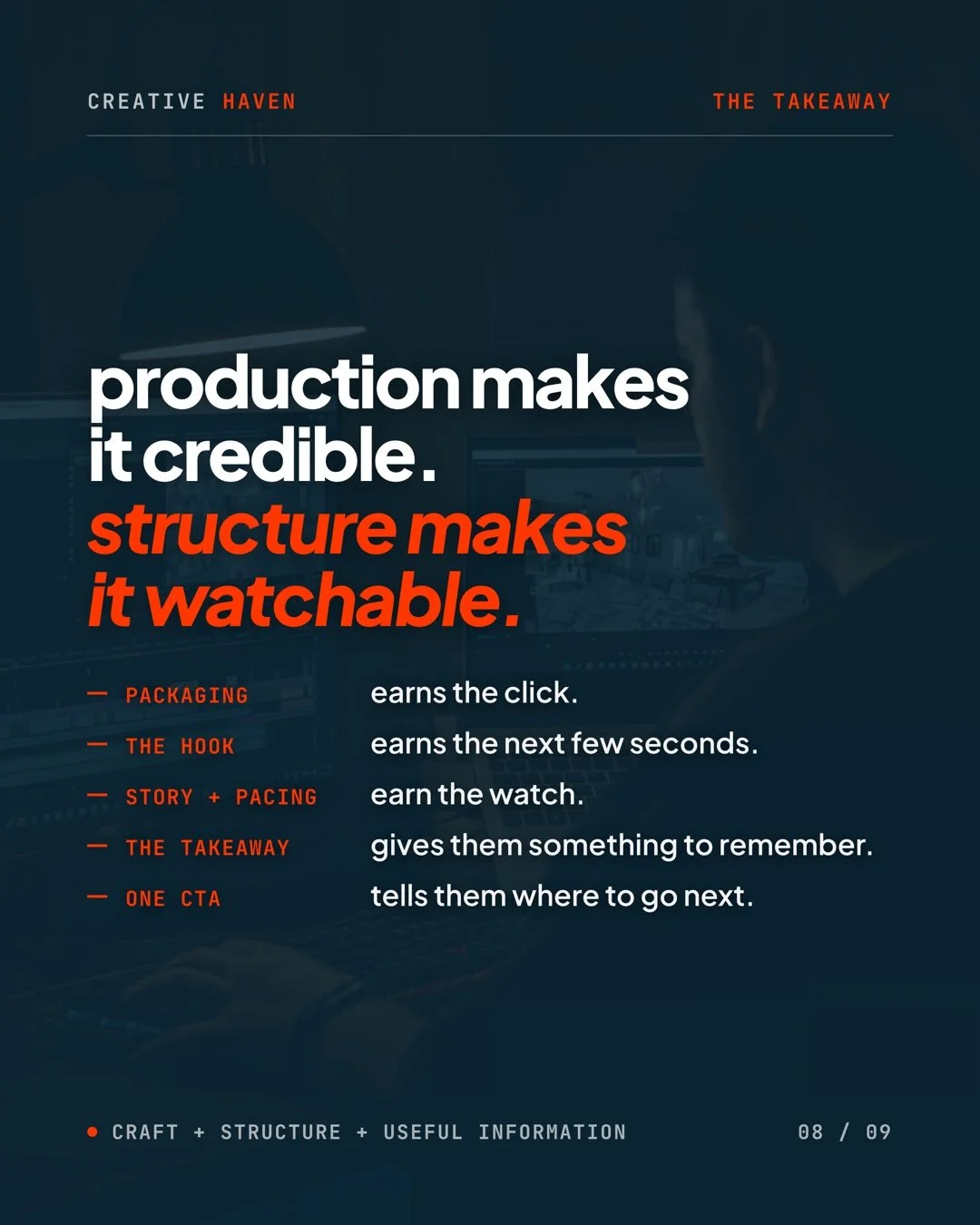
Production makes it credible. Structure makes it watchable.
Put the five rules together and you get a simple checklist. Packaging earns the click. The hook earns the next few seconds. Story and pacing earn the watch. The takeaway gives viewers something worth remembering. A clear CTA tells them where to go next.
None of this replaces good production. Clean audio, strong lighting and a skilled editor still matter. But videos that perform are planned for the feed from the start: in the brief, on the shot list and in the edit.
Use this checklist on your next project before the camera rolls, and again before the video goes live.
Need a production partner who builds for the feed?
At Creative Haven, we've spent more than 20 years on sets, with credits including HBO and Sony and brands like Stella Rosa, Halo Top and Tapatio. We help agencies and brands plan, shoot and edit social video that people actually watch. We also bring the crew when your team needs more capacity.
FAQ
What makes a good social media video?
A strong hook in the first few seconds, an intentional cover image, a clear story structure, pacing that changes the picture when the idea changes and one clear call to action.
How long should the hook be in a social video?
Use the opening few seconds. Lead with the payoff, a problem, a contrast or a mistake. Save logos and introductions for later.
Why do well-produced videos perform poorly on social media?
They're often built as deliverables for a review call, not for the feed. Without a hook, a cover, a story and tight pacing, viewers scroll past before production quality matters.