
A beautiful edit can still fall apart during client review.
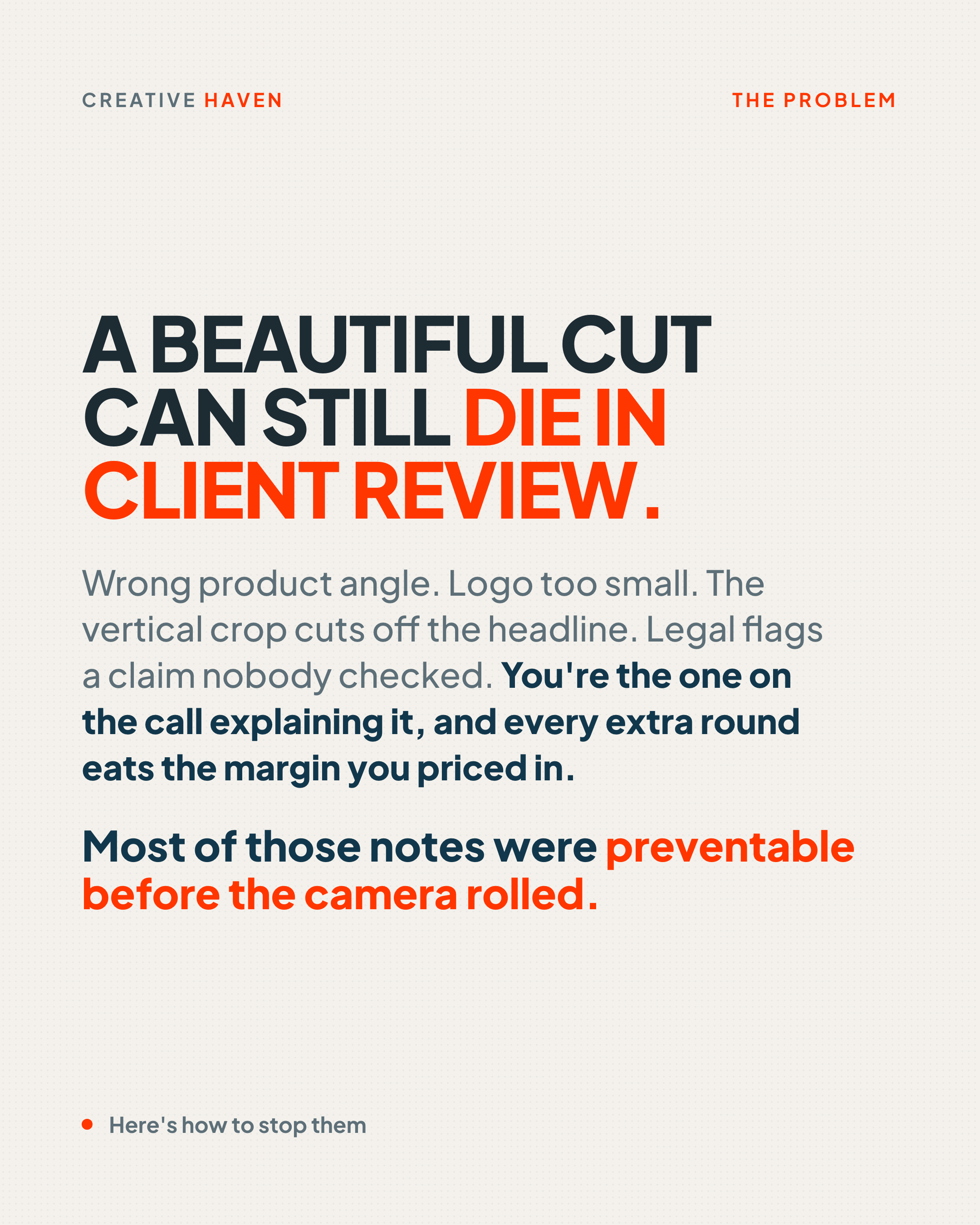
The product angle is wrong. The logo is too small. The vertical crop cuts off the headline. Legal flags a claim nobody checked. Suddenly, the creative director is explaining the same issue for the third time while another round of revisions eats into the schedule and margin.
Those notes may arrive in post-production, but many of them were created much earlier.
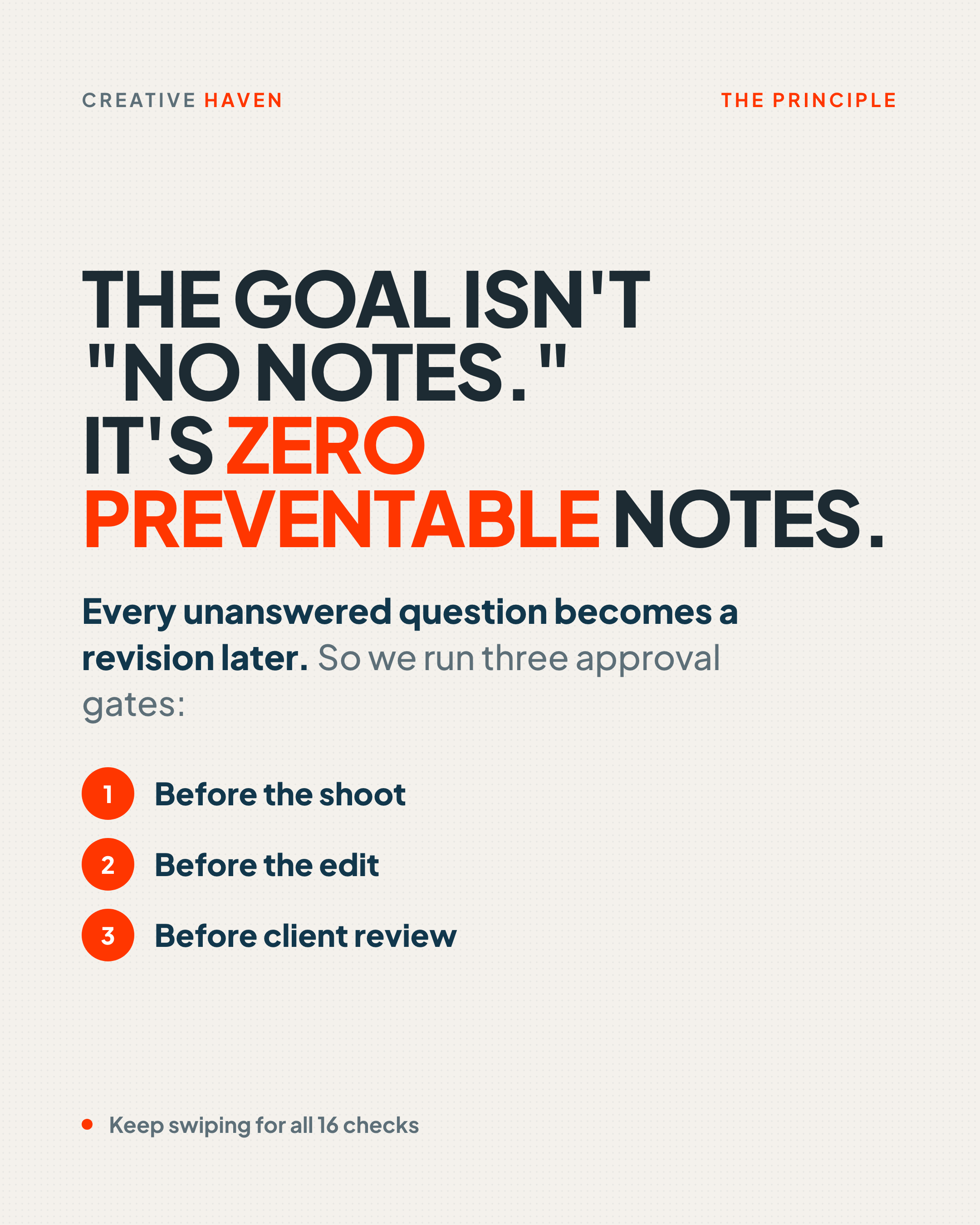
The goal is not to eliminate creative feedback. Strong work improves through thoughtful review. The goal is to eliminate preventable notes caused by missing decisions, unclear ownership, incomplete assets, and disconnected planning documents.
At Creative Haven, we organize the process around three approval gates: before the shoot, before the first cut, and before client review.
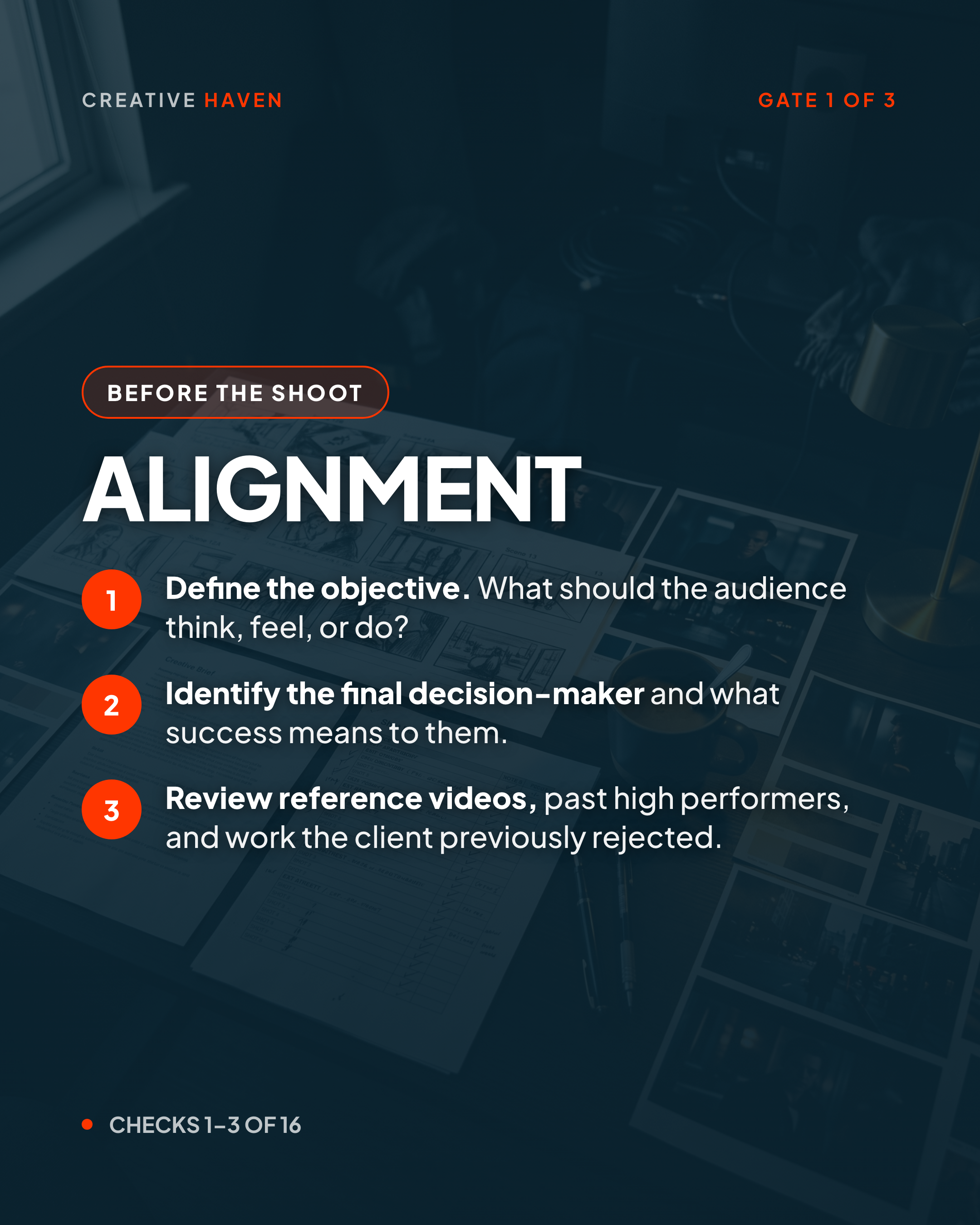
Before the Shoot: Align the Work
The first gate makes sure everyone is trying to produce the same video.
1. Define the objective
What should the audience think, feel, or do after watching? A video cannot be judged clearly if nobody has agreed on its job.
2. Identify the final decision-maker
Find out who has final approval and what success means to that person. A long list of reviewers without a clear decision-maker creates conflicting notes.
3. Review the creative evidence
Collect reference videos, the client's strongest past content, and work the client previously rejected. This reveals their actual preferences more clearly than broad words such as "premium" or "energetic."
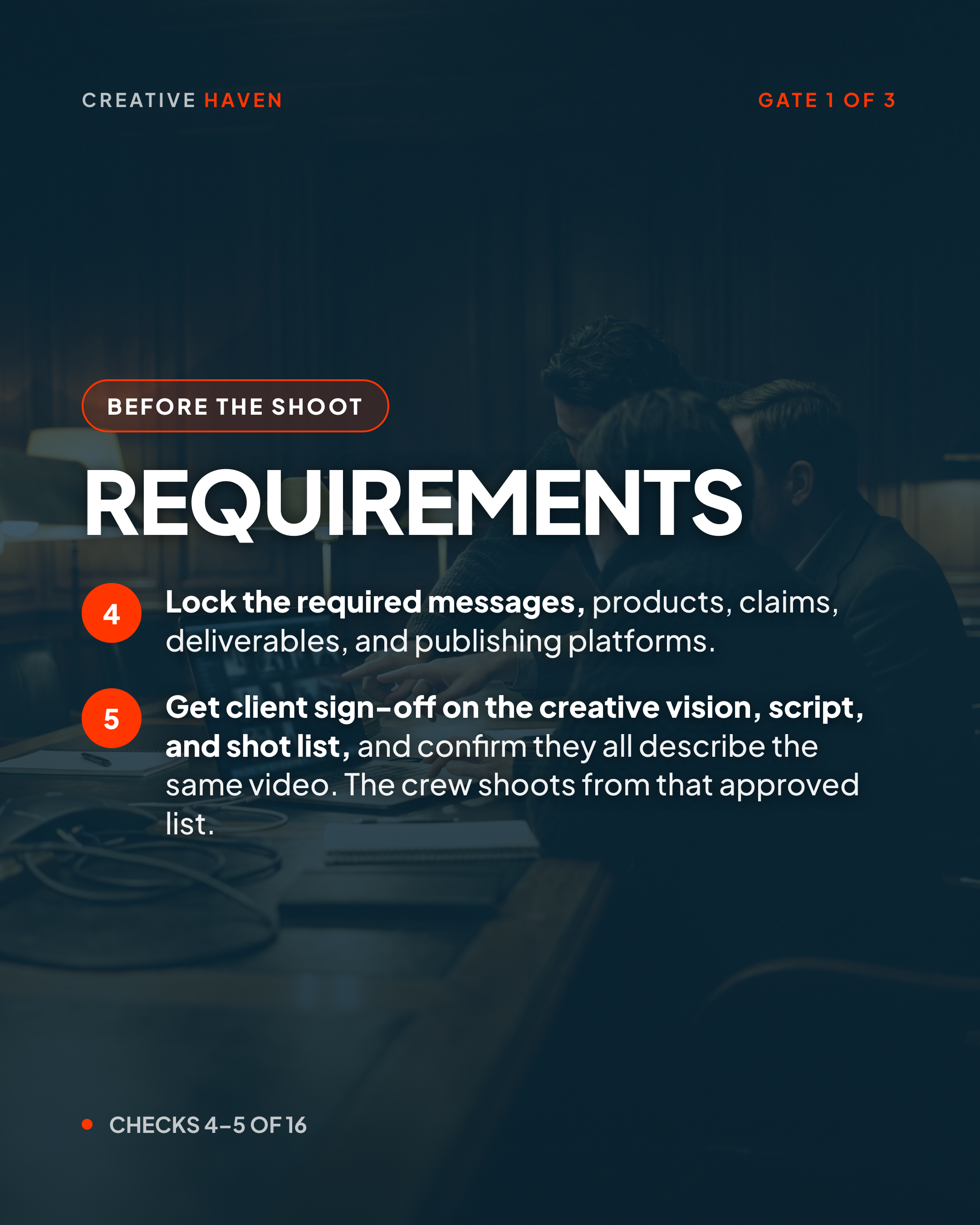
4. Lock the requirements
Confirm the required messages, products, claims, deliverables, runtimes, aspect ratios, and publishing platforms. Platform requirements affect what the crew needs to capture.
5. Reconcile every planning document
The creative brief, treatment, script, and shot list should all describe the same video. The crew should shoot from one approved plan, not four documents that quietly disagree.
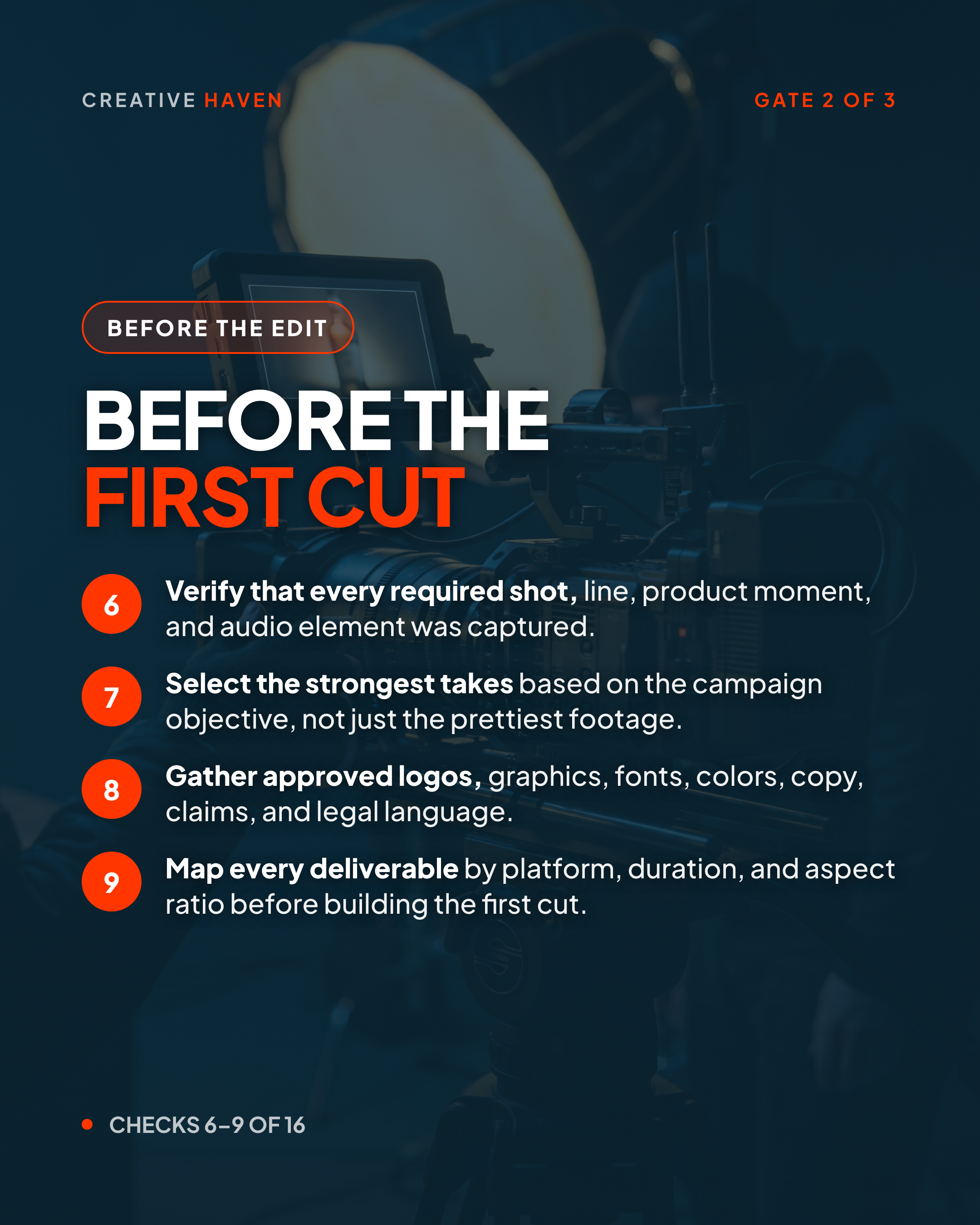
Before the First Cut: Verify the Ingredients
The second gate prevents an editor from discovering missing footage or unapproved assets after the timeline has already been built.
6. Verify the capture
Confirm that every required shot, line, product moment, and audio element was recorded before the edit begins.
7. Select for the objective
The strongest take is not always the prettiest one. Choose performances and product shots based on what the campaign needs to communicate.
8. Gather approved brand assets
Collect the final logos, graphics, fonts, colors, copy, claims, prices, names, and legal language. Editors should not be guessing which files are current.
9. Map every deliverable
Create a deliverable matrix that lists the platform, runtime, aspect ratio, caption requirements, and call to action for every version. Build this before constructing the first cut.
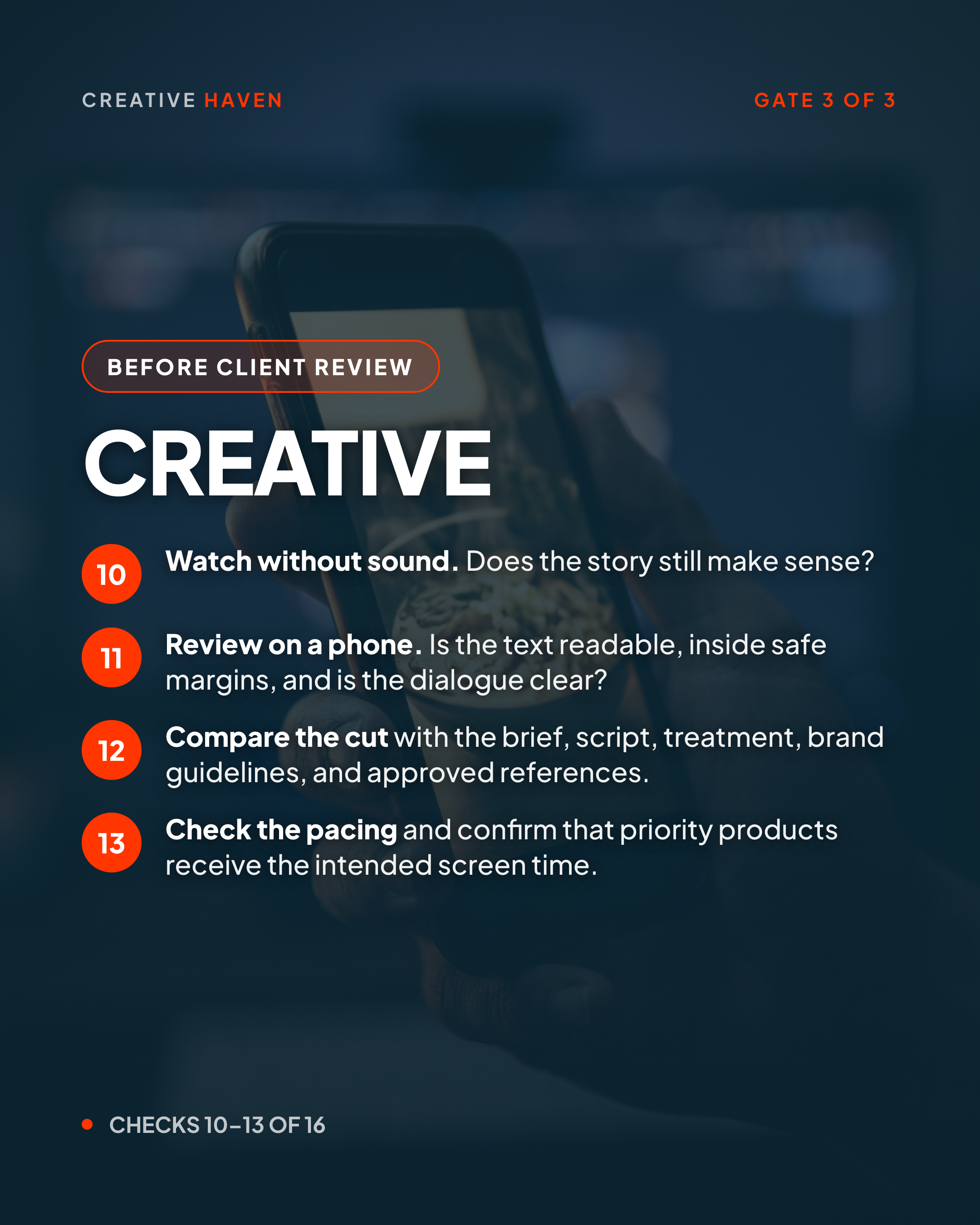
Before Client Review: Run Quality Control
The third gate reviews the cut the way the audience and client will experience it.
10. Watch without sound
Does the story still make sense? Many viewers will encounter the video muted, especially on social platforms.
11. Review it on a phone
Check whether the text is readable, inside safe margins, and supported by clear dialogue and balanced audio.
12. Compare it with the approved plan
Review the cut against the brief, script, treatment, brand guidelines, and approved references. This catches creative drift before the client does.
13. Check pacing and product priority
Make sure the priority products receive the intended screen time and that the edit gives each important idea enough room to land.
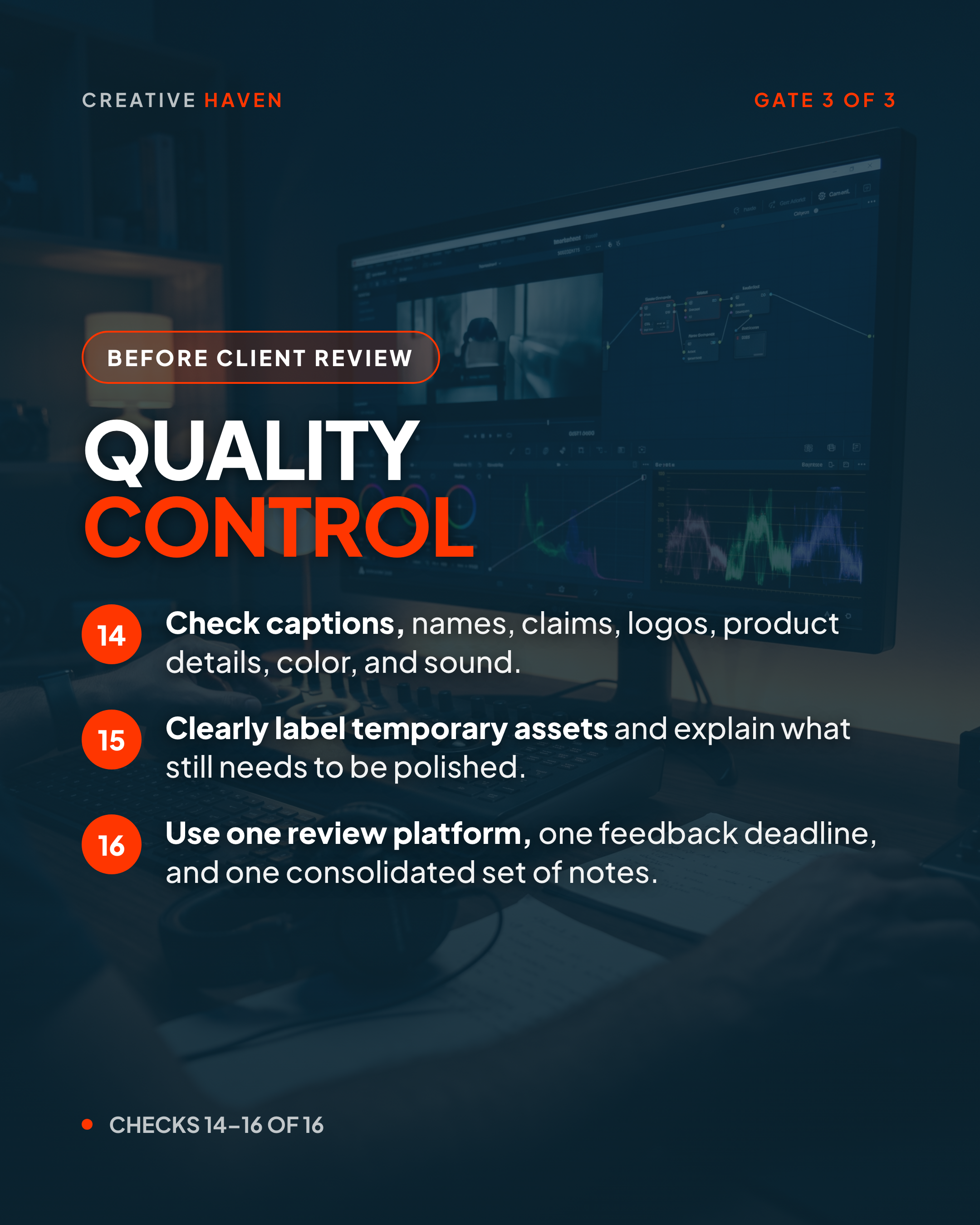
14. Run a technical and brand pass
Check captions, names, claims, logos, product details, brand colors, color grade, dialogue, music, and sound effects.
15. Label unfinished elements
If the cut contains temporary images, music, graphics, color, or sound, label them clearly and explain what will be polished after approval. Never make the reviewer guess what is intentional.
16. Centralize feedback
Use one review platform, one feedback deadline, and one consolidated set of notes. Scattered feedback across email, text messages, calls, and separate reviewers creates contradictions and missed changes.
The Real Meaning of "No Notes"
"No notes" should not mean that a client was excluded from the creative process.
It should mean the production team answered the predictable questions before they became expensive problems.
The strongest first cuts come from clear objectives, aligned decision-makers, approved references, complete assets, and a review process everyone understands.
Every unanswered question becomes a revision later.
Use this checklist before your next production, and share it with everyone who will approve the final cut.
Need a video partner who can deliver client-ready work under your agency's name? Schedule a call with our team below.