How to Vet a Video Production Partner: 8 Red Flags Agencies Should Catch Before They Sign






What are the red flags when hiring a video production company?
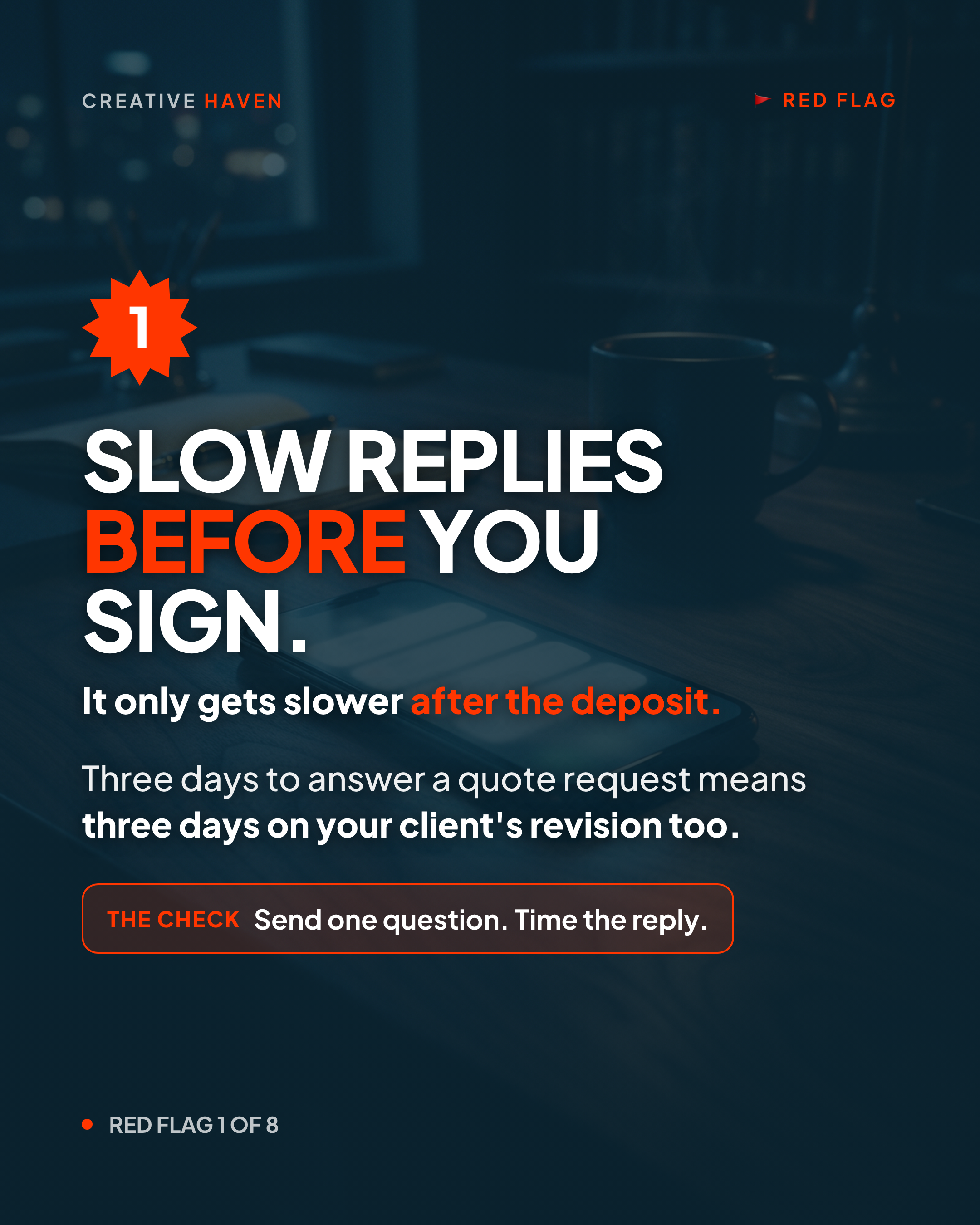
1. Slow or spotty replies before you sign
The sales stage is when a vendor is trying hardest. If it takes them three days to answer a quote request now, picture what happens when your client needs a revision by Friday. Replies don't get faster after the deposit clears.
The check: send one clear question by email and time the reply.
2. A dismissive or arrogant tone
Pay attention to how they talk to you on the first call. If they're short with you, brush off your questions or act like they know your client better than you do, that's how they'll act on set with your client in the room. I'd rather hire someone who's great at the craft and friendly than the best in the game who's a pain to work with.
The check: get on a phone or video call and see how you connect.
3. No portfolio, no website, no recent client work
A sizzle reel can be cut from anyone's footage. What you want is finished work made for real clients, ideally in the last six months and ideally in your client's category. If they can't show you that, you're taking their word for it.
The check: ask for three recent client samples you can actually click.
4. Late on calls and deliverables
Small deadlines tell you about big ones. If the quote, the script or the storyboard shows up late, the final cut will too. And on a shoot day, your client notices a late crew before you do.
The check: set a specific deadline for every call and every deliverable, and watch which ones they hit.
5. No homework on the brand
A good partner shows up to the first call knowing the product line, the channels the brand posts on and what its content already looks like. If they haven't looked, expect generic shots that could belong to any brand.
The check: ask for their vision for the shoot. Listen for specifics about the brand, not a general pitch.
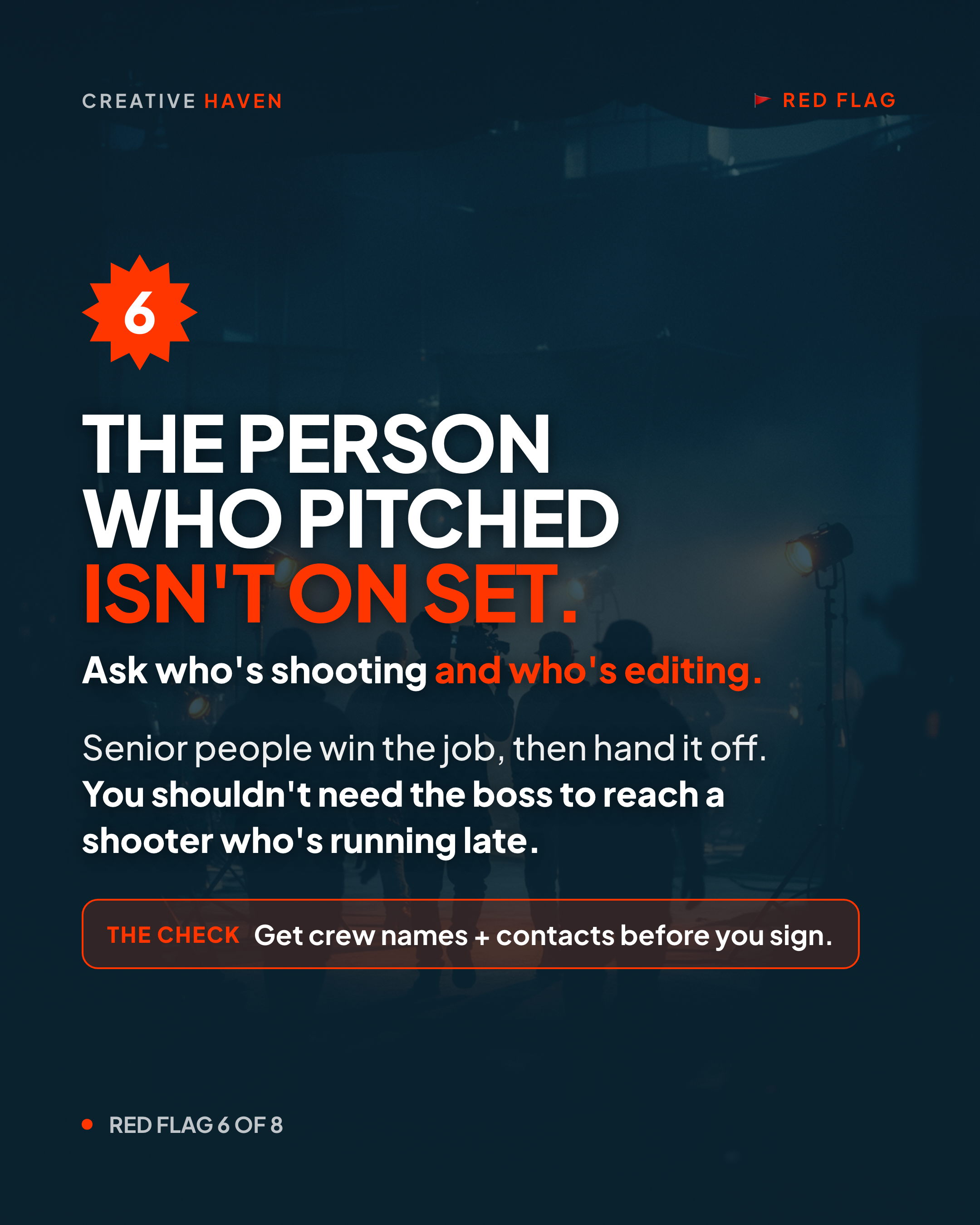
6. The person who pitched isn't the person on set
This one is common. A senior person wins the job, then hands it to a crew you've never met. On shoot day, you can't reach the shooter who's running late because you only have the owner's number.
The check: get the crew list, with names and contact info, before you sign. Put it on the call sheet.
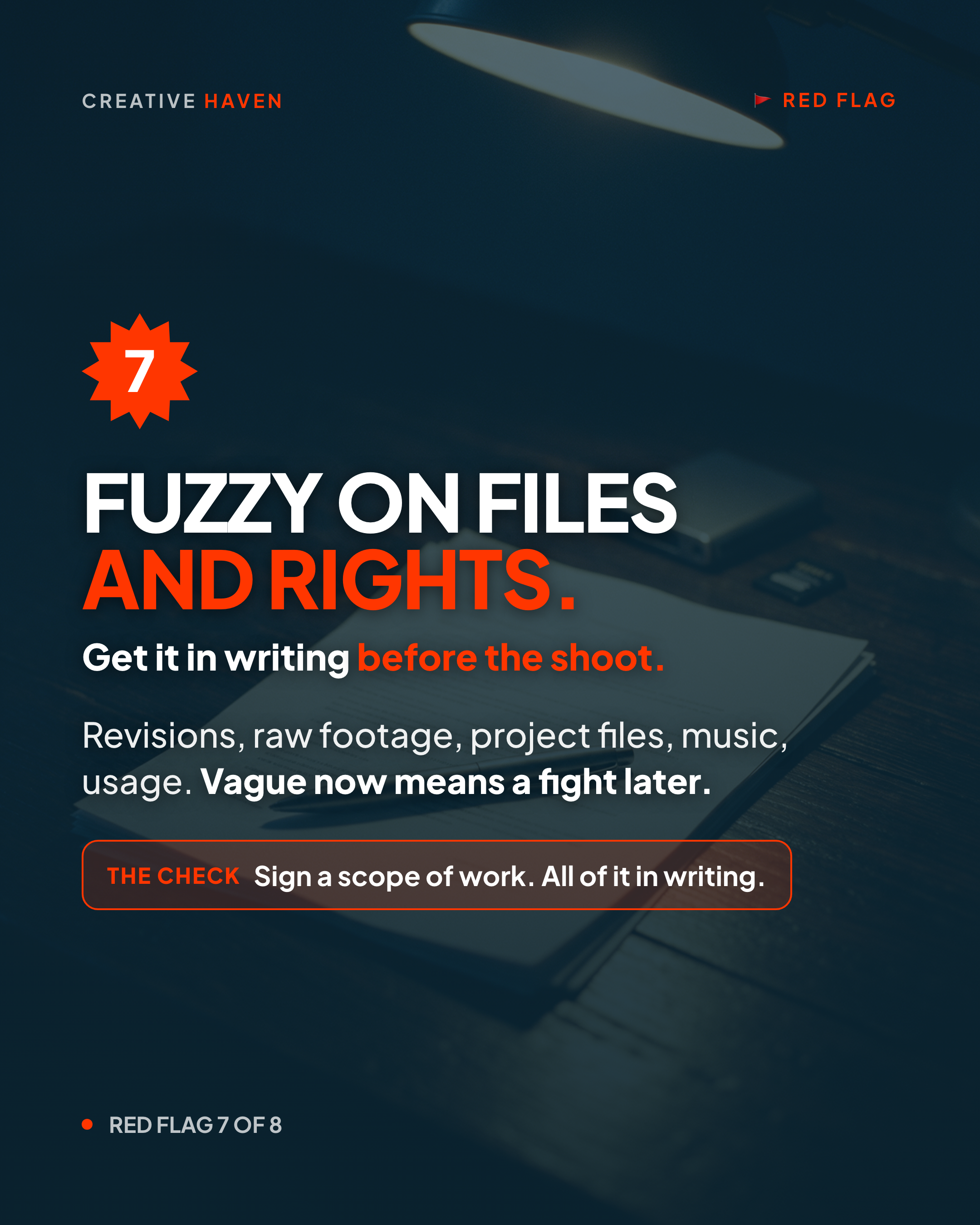
7. Fuzzy terms on files, revisions and usage rights
Who owns the raw footage? How many rounds of revisions are included? Can the client run the video as a paid ad, and for how long? Is the music licensed for that? If those answers are vague now, they turn into an argument later, usually right when your client is waiting.
The check: create and sign a scope of work that spells out deliverables, revisions, files and usage before the shoot.
8. They go around you to your client
This is the white-label red flag. A vendor who hands your client a business card, pitches them directly or puts their own logo on the work is building their book of business with your relationship. A real production partner works under your name and never talks to your client unless you bring them in.
The check: ask for references from other agencies they've worked with, and ask those agencies how the vendor handled the client.
How do you vet a white-label video partner quickly?
You don't need a long procurement process. Most of these checks happen naturally in the first week:
Send the brief and time the reply.
Get on one call and pay attention to tone.
Ask for three recent client samples and two agency references.
Request the crew list with contacts.
Ask for their vision for the shoot.
Put deliverables, revisions, files and usage into a signed scope of work.
If a vendor gets through all six without a red flag, you've probably found someone you can send straight into a client room.
What should a good video partner do instead?
Flip the list and you have the standard. Fast replies. A friendly, professional team. Real client work you can see. On time for every call and deadline. Strategy for the brand on top of the production. Transparency on crew and budget. Scope and deliverables in a signed contract. And a team that keeps your name on the work.
That's the bar we hold ourselves to at Creative Haven, because we know what it costs when a partner doesn't. Use this list on us too.
FAQ
What questions should I ask a video production company before hiring them?
Ask who will be on set and in the edit, how many revisions are included, who owns the raw files, what usage rights the client gets, and for three recent client samples and two references.
Is a low quote a red flag?
Not on its own. A low quote becomes a red flag when the scope is vague, because the missing pieces (revisions, files, music, usage) tend to show up later as extra charges.
What does white-label video production mean?
It means the production company makes the content and your agency delivers it under its own name. The production partner stays invisible to your client unless you introduce them.
How long should vetting a video partner take?
About a week. One call, one brief, a few samples and a signed scope of work will surface most of these red flags.
Looking for a video partner your agency can trust with food, CPG and consumer-brand clients? Book a call below!